 ACE Tree Information
ACE Tree Information
ACE Tree Information
Here's information:
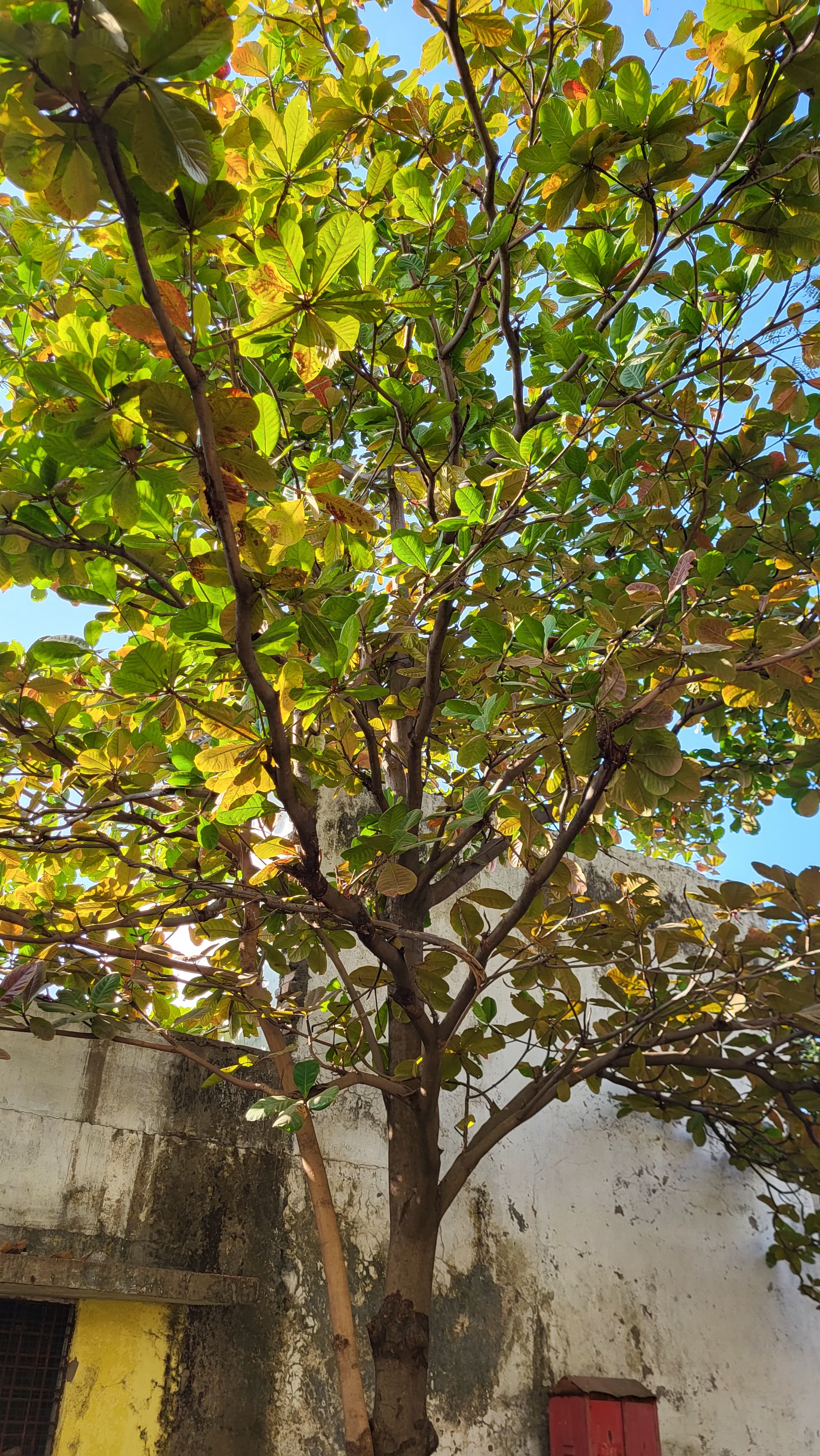
| Parameter | Details |
|---|---|
| Scientific Name | Terminalia catappa |
| Common Name | Indian Almond, Tropical Almond, Sea Almond |
| Family | Combretaceae |
| Type | Deciduous Tree |
| Leaf Type | Broad, leathery, obovate leaves that turn red before falling |
| Flower Color | Greenish-white |
| Fruit Type | Drupe (almond-like seed inside a fibrous outer shell) |
| Water Requirements | Moderate; drought-tolerant but prefers well-drained soil |
| Medicinal Uses | Yes; used in traditional medicine for treating digestive issues, skin diseases, and as an antimicrobial |
| Medicinal Uses In Marathi | होय; पारंपारिक औषधामध्ये पचन समस्यां, त्वचारोग आणि सूक्ष्मजीवविरोधी उपचारांसाठी वापरले जाते. |
| Location in Garden | Near the main entrance |
"The Indian Almond (Terminalia catappa), also known as the Tropical Almond or Sea Almond, is a large deciduous tree belonging to the Combretaceae family. Native to tropical Asia, Africa, and Australia, this tree thrives in warm, coastal, and tropical regions due to its high salt tolerance. It has broad, leathery leaves that turn red or yellow before falling, creating a stunning seasonal display. The tree produces greenish-white flowers that develop into drupe-like fruits, inside which the almond-like edible seeds are found. These seeds are rich in healthy fats and proteins. The leaves, bark, and seeds have been widely used in traditional medicine, particularly for digestive health, skin conditions, and antimicrobial benefits. The leaves also contain antioxidants and are often used in herbal teas and aquariums to improve water quality and fish health. Besides its medicinal uses, the Indian Almond tree plays an essential environmental role by absorbing carbon dioxide and releasing oxygen, contributing to a cleaner atmosphere. It is commonly grown for shade, ornamental landscaping, and erosion control in tropical and coastal areas. With its nutritional, medicinal, and environmental benefits, the Indian Almond is a valuable tree in both urban and natural ecosystems."
"""भारतीय बदाम (Terminalia catappa), जो उष्णकटिबंधीय बदाम किंवा सागर बदाम म्हणून ओळखला जातो, हा एक मोठा पर्णपाती वृक्ष आहे जो Combretaceae कुटुंबाशी संबंधित आहे. उष्णकटिबंधीय आशिया, आफ्रिका आणि ऑस्ट्रेलियात जन्मलेला हा वृक्ष उष्ण, किनारी आणि उष्णकटिबंधीय प्रदेशांमध्ये त्याच्या उच्च लवण सहनशक्तीमुळे समृद्ध होतो. याला रुंद, चमकदार पाणीदार पातळ्या असतात, जी पिकण्यापूर्वी लाल किंवा पिवळ्या रंगात बदलतात आणि हा एक सुंदर ऋतुविहार तयार करतो. हा वृक्ष हिरव्या-पांढर्या फुलांचे उत्पादन करतो जे फळांमध्ये रूपांतरित होतात, ज्यात बदामासारखी खाद्याची बियाणे असतात. ही बियाणे निरोगी फॅट्स आणि प्रथिनेने समृद्ध असतात. पाने, काडी आणि बियाणे पारंपारिक औषधात प्रामुख्याने पचन आरोग्य, त्वचारोग आणि सूक्ष्मजीवविरोधी फायदे यासाठी वापरले जातात. पानांमध्ये अँटीऑक्सिडंट्स देखील असतात आणि त्यांचा वापर हर्बल चहा आणि एक्वेरियममध्ये पाणी गुणवत्ता आणि मासे आरोग्य सुधारण्यासाठी केला जातो. औषधीय उपयोगांव्यतिरिक्त, भारतीय बदाम वृक्ष पर्यावरणीय दृष्ट्या महत्त्वपूर्ण भूमिका निभावतो, तो कार्बन डायऑक्साईड शोषित करतो आणि ऑक्सिजन रिलीज करतो, जे स्वच्छ वातावरणात योगदान करते. उष्णकटिबंधीय आणि किनारपट्टी क्षेत्रांमध्ये छायेत वाढवले जाते, सजावटीच्या लँडस्केपिंगसाठी आणि माती खोळंबण्याच्या नियंत्रणासाठी सामान्यतः लागवड केली जाते. त्याच्या पोषणतत्त्व, औषधीय आणि पर्यावरणीय फायदे यामुळे भारतीय बदाम वृक्ष शहरी आणि नैतिक पर्यावरणीय प्रणालींमध्ये एक महत्त्वपूर्ण वृक्ष आहे."""
Click the button below to download the file: